Soak tanks
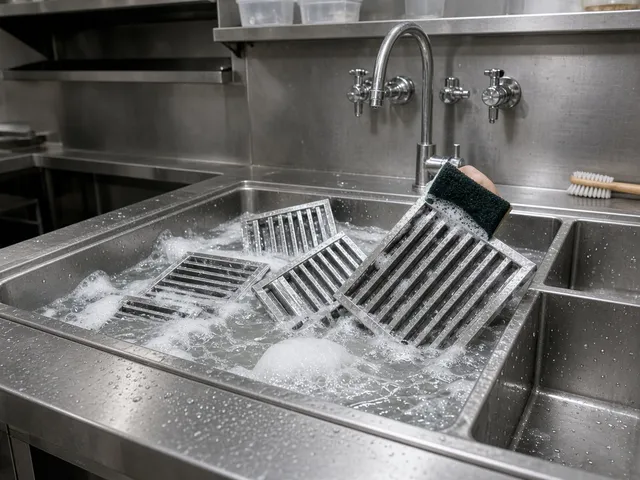
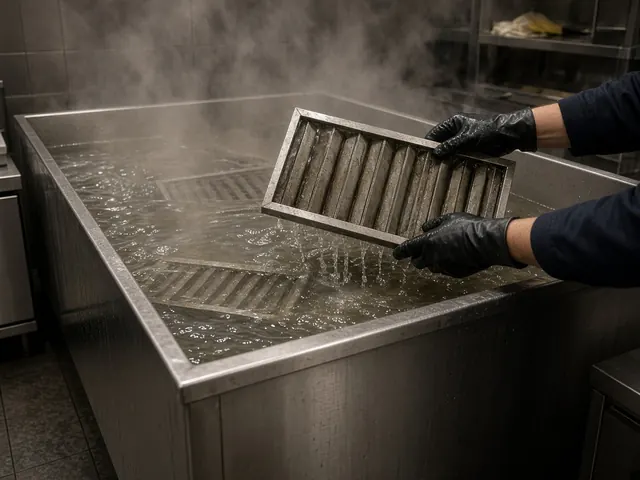
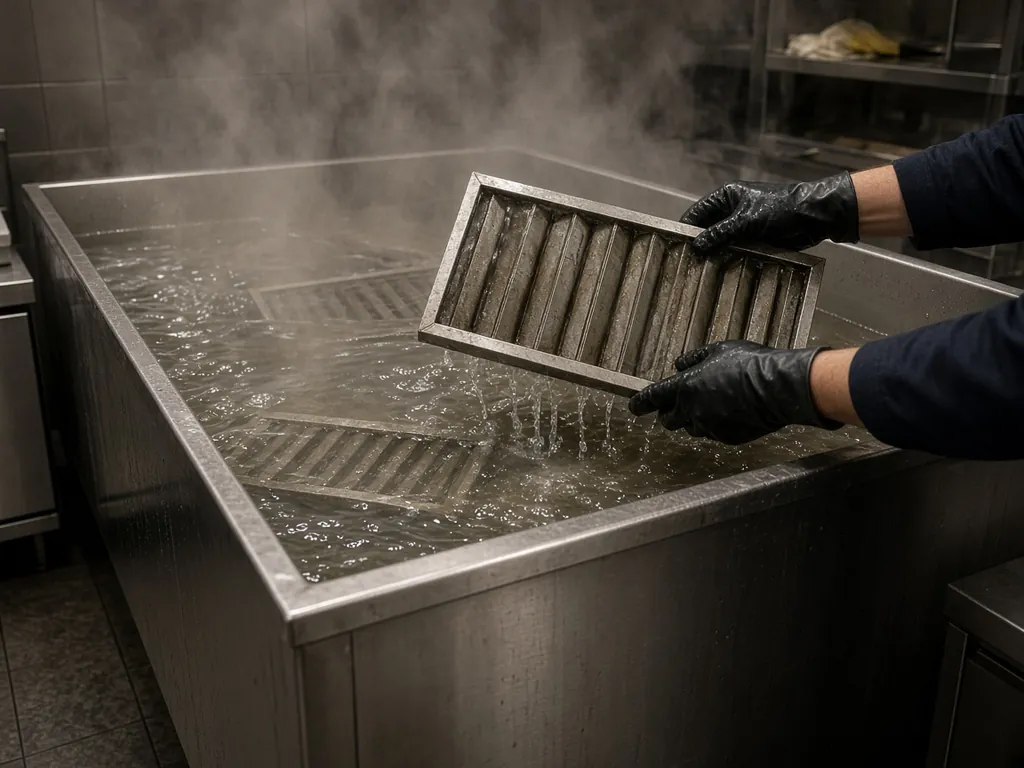
Heated soak tanks hold filters in hot water and cleaning compound overnight or between shifts. They're popular because they need little labor and clean evenly. Choose a tank big enough for your largest filter and put it somewhere safe, away from walkways.
Dish machines and filter washers
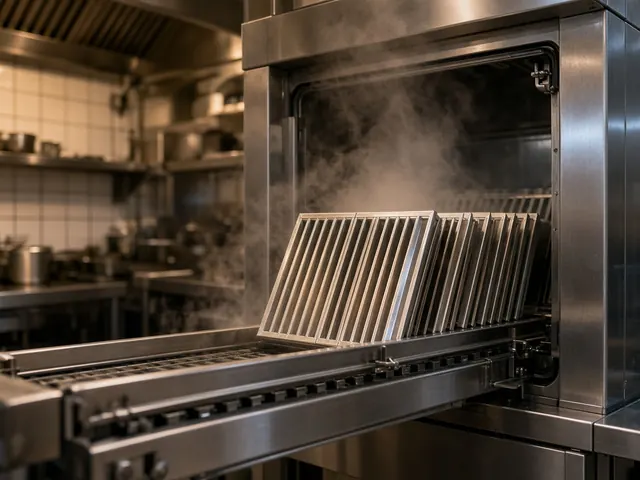
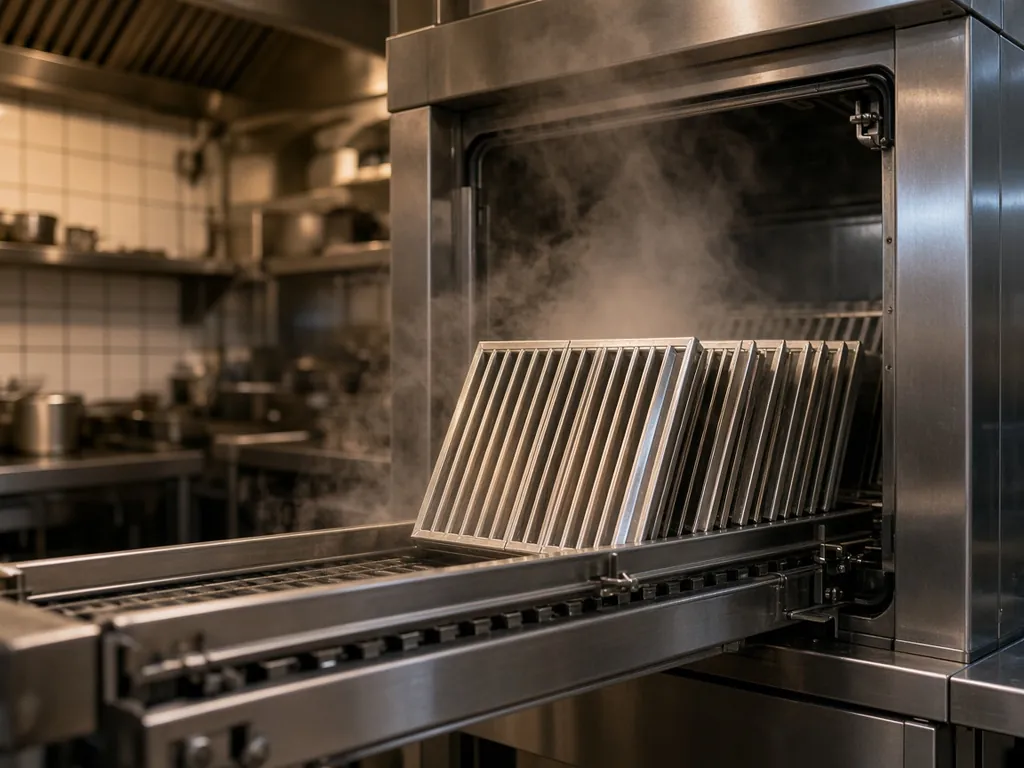
Many stainless filters tolerate commercial dish machines. Heavily loaded filters can overwhelm a machine's wash tank, so knock loose grease off first or pre-soak. Dedicated filter washers exist for high-volume operations.
Degreasers
- Use products labeled for the filter metal. Strong alkaline cleaners can damage aluminum and galvanized coatings.
- Keep safety data sheets on hand and train staff on PPE, as OSHA's Hazard Communication standard requires.
- Never mix chemicals.
Grease and wastewater
Grease washed out of filters counts as fats, oils and grease (FOG). Many cities regulate FOG discharge through pretreatment programs and grease-interceptor rules. Ask your local utility what's allowed down your drains.
Sources
- OSHA: Hazard Communication standard (accessed November 9, 2026)
- US EPA: National Pretreatment Program (fats, oils and grease) (accessed November 9, 2026)
Frequently asked questions
Is a soak tank better than a dish machine?
They suit different kitchens. Soak tanks need less labor for heavy grease; dish machines are faster for lightly loaded stainless filters.
Can I pressure-wash filters outside?
Only where local rules allow. Grease runoff into storm drains is commonly prohibited.